


Tram bridge cast railing in Liepaja


Tram bridge cast railing in Liepaja
The tram bridge over the Trade Canal is one of Liepaja's notable urban infrastructure structures. During reconstruction, the task was not simply to replace damaged cast-iron railing elements, but to preserve the historic appearance and adapt the structure to modern requirements for installation, reliability and operation.
The project combined architectural casting, engineering design, a restoration approach and large-format casting technology. The production team of the site that now operates as part of West Baltic Group prepared production documentation, 3D design, pattern and foundry tooling, moulding and production of new cast-iron railing elements.
Project features
- The bridge was built in the 1950s, and during reconstruction its geometry had to be changed and the railing relocated.
- A significant part of the old cast elements could not be reused because of cracks, corrosion, damaged fastening zones and the features of the old posts.
- The geometry was restored from 1950s drawings and original elements dismantled from the bridge.
- The external architectural form was kept close to the historical sample, while the hidden structural part was adapted for installation, reliability and durability.
Documentation and structure
The old drawings did not contain all the information needed for modern production. Missing dimensions, the decorative pattern shape and the configuration of individual elements were clarified from actual sections and posts through measurements, photo documentation, comparison with archive documentation and subsequent design development.
Based on these data, 3D models, working drawings, specifications, cast-part drawings and fastening solutions were prepared. Fastenings of sections between posts, post fixings to the bridge parapet, fastening holes, mating surfaces and seating surfaces were clarified separately. Drainage solutions were provided in the posts to prevent water accumulation inside and reduce the risk of damage during freeze-thaw cycles.
Material and technology
New elements were made from grey cast iron — a material of the same class as the old railing elements. For outdoor service and a bridge railing, material stability, surface quality, absence of cracks, correct geometry and reliability of fastening zones were important. Before painting, castings underwent abrasive blasting; painting was performed by a contractor.
For long sections and posts, 3D models, casting drafts, mould parting lines, the gating and feeding system, process risers and pouring mode were developed. Computer simulation of casting processes was used to assess mould filling, metal solidification, directional solidification and risk zones.
Tooling and moulding
Pattern equipment was manufactured on CNC machines with manual finishing where required for surface quality and reproduction of the decorative pattern. The most representative long railing section was 2,370 mm long and had a casting weight of 372 kg; the pattern plate approached three metres.
Moulding was performed using cold-setting sand mixture technology. Special foundry and flask tooling was manufactured for the project: large flasks, a lifting beam, trunnions and a set of fixtures for assembly, turning and moving moulds. Several cores were used in the sections, and hollow posts required core-box tooling.
Control and result
- Before serial production, trial castings were made for measurement and approval by the customer.
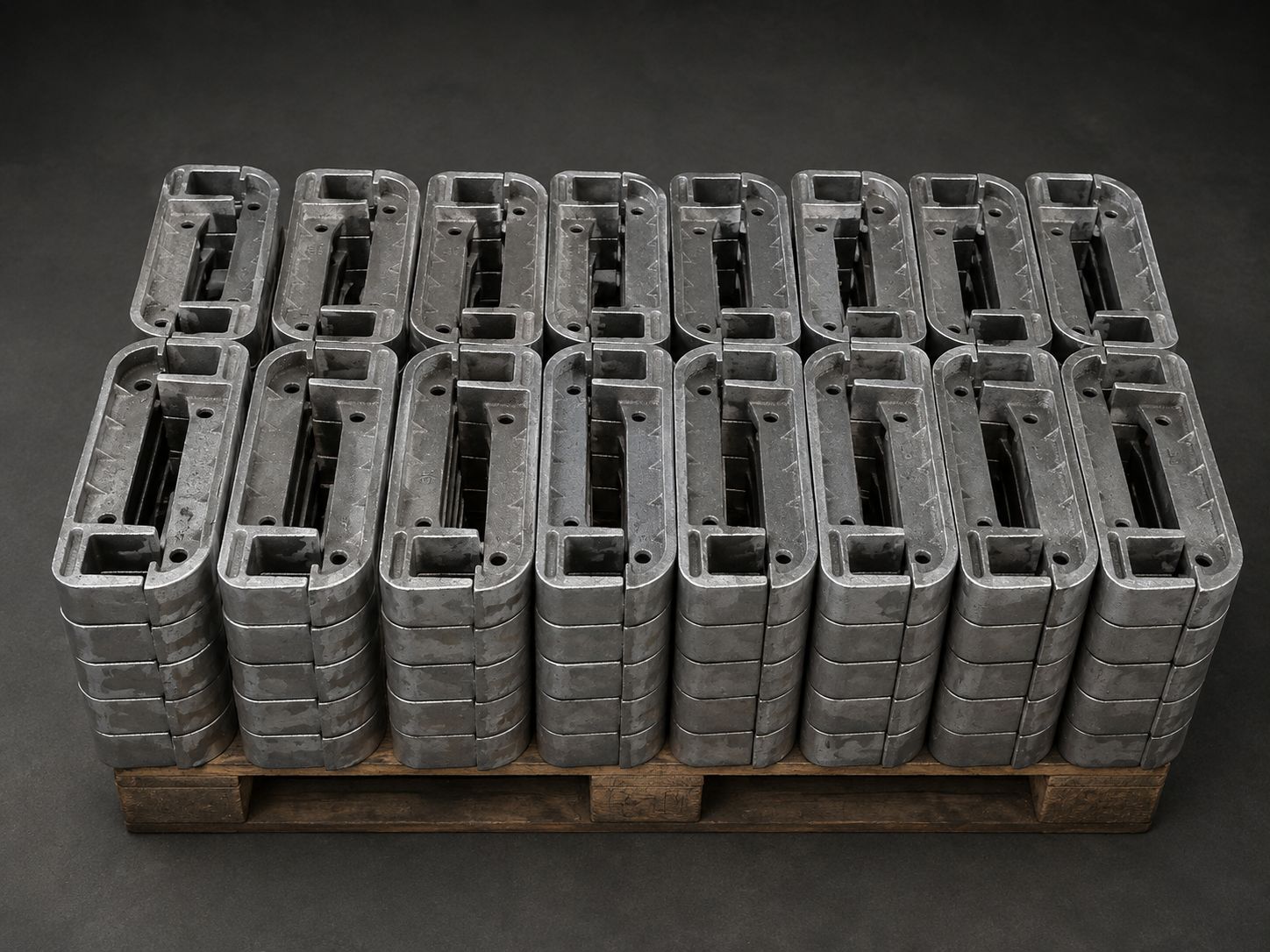
- In total, dozens of cast railing elements were manufactured: posts and sections of different sizes.
- Geometry, appearance, decorative pattern, absence of cracks, fastening dimensions, mating surfaces and seating surfaces were controlled.
- The chemical composition and structure of grey cast iron were controlled to confirm material stability.
The project was accepted by the customer without significant comments, and the new castings were installed on the reconstructed bridge. Several original sections suitable for reuse were preserved as historic elements and integrated into the renewed railing.
This case demonstrates experience with architectural, restoration and urban casting: bridge railings, tree grilles, cast urban furniture, embankment, park and public-space elements.